
Cultural Anchors in a Time of War
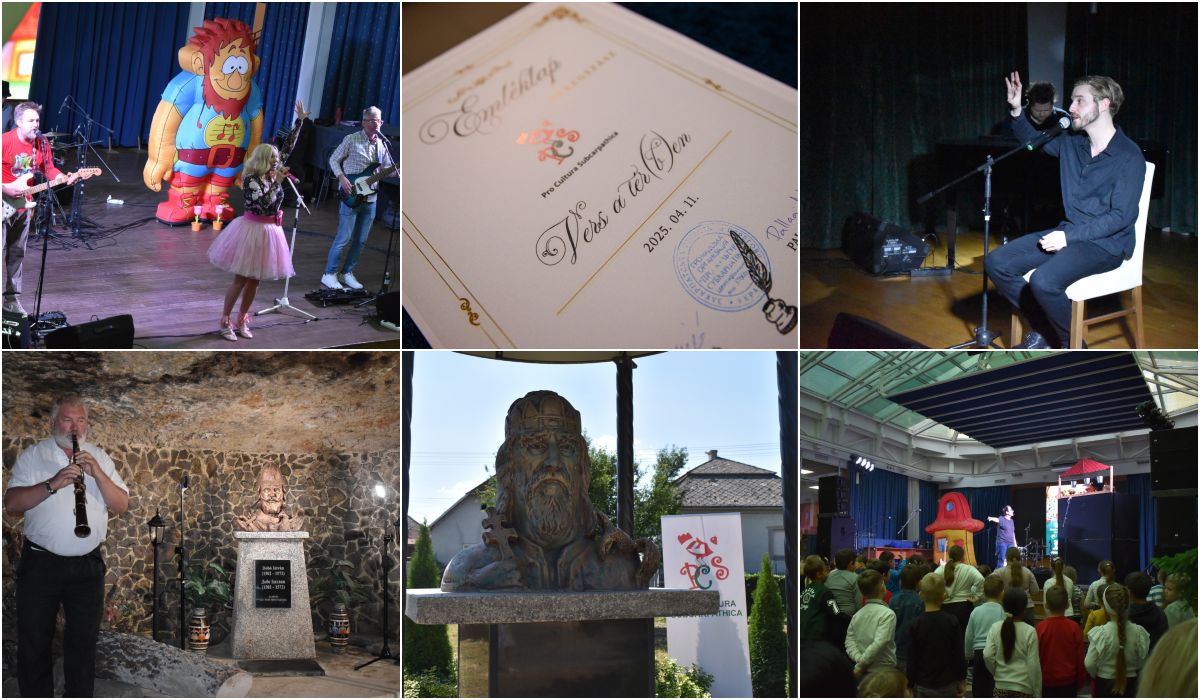
Since its founding in 2011, Pro Cultura Subcarpathica has worked with unwavering commitment to preserve and promote Hungarian culture and traditions in Transcarpathia. Over the years, the organization has grown into one of the defining pillars of Hungarian cultural life in the region.
But their mission goes far beyond organizing events.
In Nagybereg, they operate a living folk house — a vibrant cultural space that in 2021 became the first institution outside Hungary’s borders to receive the prestigious “Folk House of the Year” award. Their festivals and community programs attract thousands each year, while consistently serving a greater purpose: building bridges between national minorities and strengthening community bonds through culture.
A Living Heritage for the Young
The Nagybereg Etnographic Museum remains one of the most beloved heritage venues among schoolchildren in Transcarpathia.
In the spring of 2025 alone, twelve educational sessions welcomed 445 visitors. The autumn semester brought fifteen more programs, drawing another 420 students. These experiential learning workshops allow children and young people to encounter folk culture firsthand — exploring traditional lifestyles, crafts, and material heritage not from textbooks, but through lived experience.
The programs were made possible with the support of the Sándor Csoóri Program and the Transcarpathian Branch of the House of Traditions.
Holding On Through Culture
Despite the ongoing war and the challenges it brings, 2025 became another year in which Pro Cultura Subcarpathica consciously focused on providing emotional stability and community experiences for the Hungarian population of Transcarpathia.
The year opened with events marking the Day of Hungarian Culture, beginning with an online drawing and photography competition and culminating in a cultural gathering at the Perényi Cultural Mansion. Audiences were treated to the powerful performance “Mondjad, Atikám!” by Miklós Vecsei H. and Erik Tempfli.
In cooperation with the Ferenc Rákóczi II Transcarpathian Hungarian University, the organization enabled nearly 100 students and their chaperones to attend the Rákóczi birthday commemoration in Borsi, at the invitation of the László Teleki Foundation. Along the way, participants also visited Dobóruszka and Nagykapos, reinforcing shared historical and cultural ties across the Carpathian Basin.
Culture, Identity, Remembrance
On April 11, the Day of Hungarian Poetry, more than 600 students from 27 schools gathered in a flash mob to collectively recite a poem by László Nagy — a moving demonstration of unity through literature.
Due to wartime restrictions, the traditional flag-raising ceremony commemorating the Transcarpathian events of the Rákóczi War of Independence was adapted into wreath-laying ceremonies in Mezővári and Beregszász.
The Day of National Unity was marked by an exhibition opening and the TehetségPaletta program, followed by a full-day cultural celebration at the Perényi Cultural Mansion on June 5. Meanwhile, the Rákóczi University hosted a month-long exhibition of András Berecz’s photo selection “Heartbeat in the Heights,” open to visitors free of charge.
Pro Cultura Subcarpathica also represented Transcarpathia at the National Assembly of Hungarians, welcoming visitors with book and costume exhibitions, craft workshops, and traditional folk games.
Throughout the year, remembrance played a central role. Commemorations honored St. Stephen in Mezőkaszony, István Dobó in Szerednye, Krisztina Csáky and Miklós Bercsényi at BercsényiFest, and Bethlen Day in Huszt. The organization also paid tribute to the victims of the 1944 air raid in Beregszász, the heroes of the 1956 Revolution, and the Transcarpathian victims of the “malenki robot.”
Among the year’s highlights were the Magic of Tales Festival, organized in partnership with Hungary’s Kalló Foundation, and the now-traditional storytelling gathering — both affirming the enduring power of narrative in preserving identity.
Crafting Community – The Szakkör Program
One of the organization’s most dynamically growing initiatives is the Szakkör program, launched by the National Institute of Culture.
What began five years ago as a pilot initiative coordinating four workshops has grown into a network of 33 craft circles by 2025. Participants learn traditional crafts in small groups of five through guided online instructional videos. Yet the program offers more than practical skills — it fosters belonging, strengthens local identity, and creates resilient communities.
Shared Advent – Shared Hope
The year concluded with the Shared Advent series in Beregszász. On November 30, 2025, Pro Cultura Subcarpathica lit the first Advent candle, followed by an Advent concert in December that enriched the season of preparation with music and reflection.
The organization also joined the charity Advent fair organized by the Transcarpathian Hungarian Tourism Council and the Cultural Association of Hungarians in Transcarpathia. Proceeds supported the Good Samaritan Reformed Children’s Home in Nagydobrony and assisted single-parent families within the Association of Transcarpathian Hungarian Large Families.
In 2025, Pro Cultura Subcarpathica once again proved that culture is not merely about safeguarding tradition — it is a living, community-forming force. Even in times of war, it offers strength, identity, and hope.
And in 2026, the work continues.
The programs were supported by the Hungarian Government and Bethlen Gábor Fund Ltd.